Tag: psychology

Four things I wish I knew before studying psychology at CMU | Madeleine Lambert

Looking back, it’s hard to believe how much these past few years have shaped me—not just as a student, but as a person. When I first stepped onto campus, I had all kinds of expectations about what university would be like, most of them built on guesswork and nerves. However, the truth is, nothing could have fully prepared me. The journey has been filled with surprises—some challenging, some exciting, but all of them worth it. If I could go back and prepare myself, these are the four things I would want to know before entering the psychology program at CMU.

1. You’ll study more than just psychology
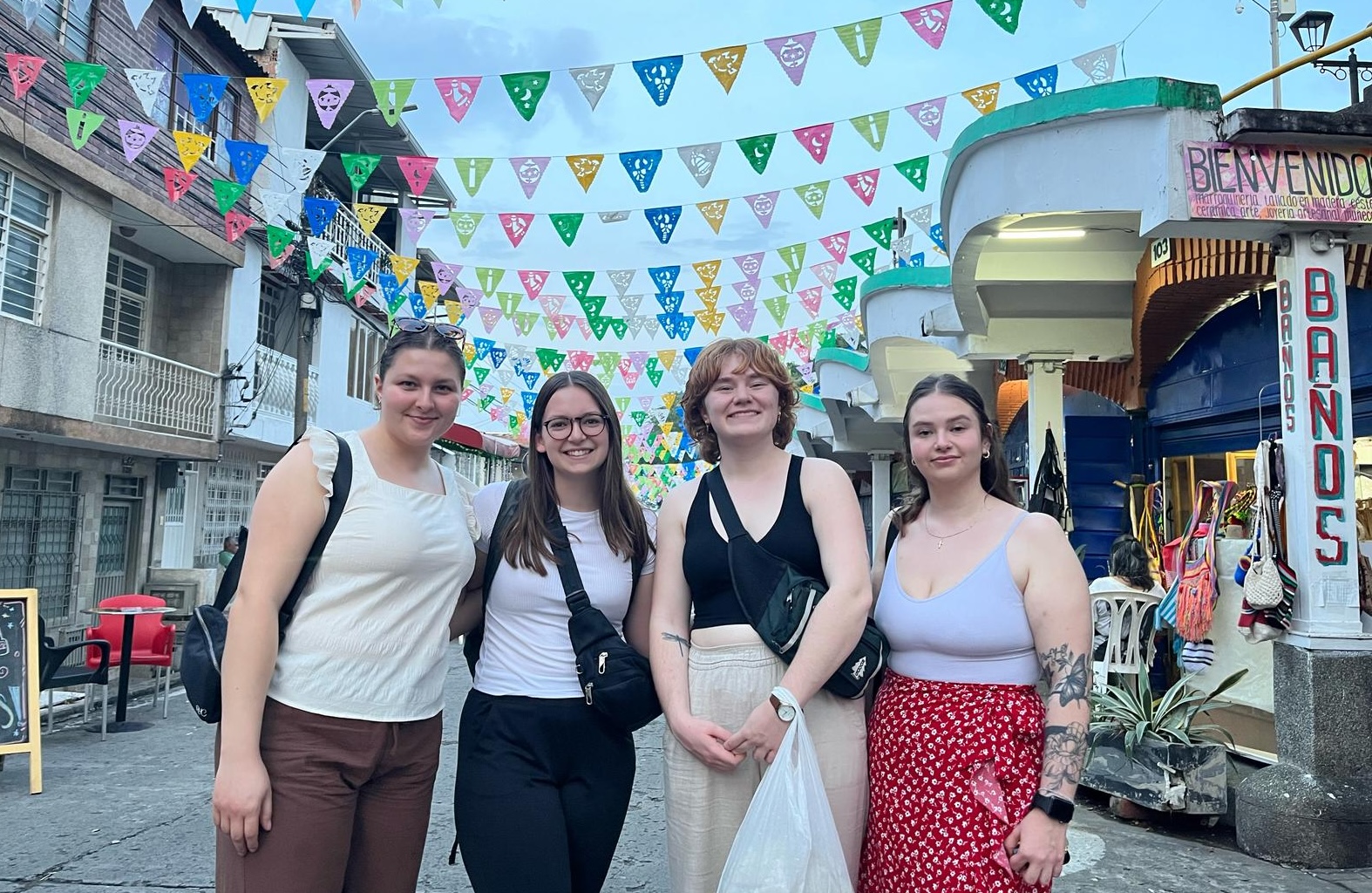
I travelled with some other CMU students to Colombia for a course called Peacebuilding in Conflicted Contexts.

When I declared psychology as my major, I thought my path was set: a steady diet of psychology courses from first year to graduation. That illusion vanished quickly. My degree required me to branch out into other areas, leading me to choose courses in biblical and theological studies, math, philosophy, sociology, and anthropology. At first, I wasn’t impressed. I worried that I’d lose focus on the subject I’d come here to study. But a few weeks in, my mindset began to shift. Those “extra” courses started connecting back to psychology in ways I couldn’t have imagined. A philosophy discussion would echo a concept from social psychology; anthropology gave me new ways to think about human behavior; even mathematical thinking sharpened the way I approached research methods. What I once saw as distractions turned out to be some of the richest parts of my education. I even got the opportunity in my fourth year to travel to Colombia for a course titled “Peacebuilding in Conflicted Contexts,” which brought together themes in psychology and peacebuilding. So, if you find yourself frustrated by requirements outside your major, don’t write them off. They might be the very courses that expand your vision of what psychology—and learning itself—can be.

2. Prepare to put on your critical thinking cap
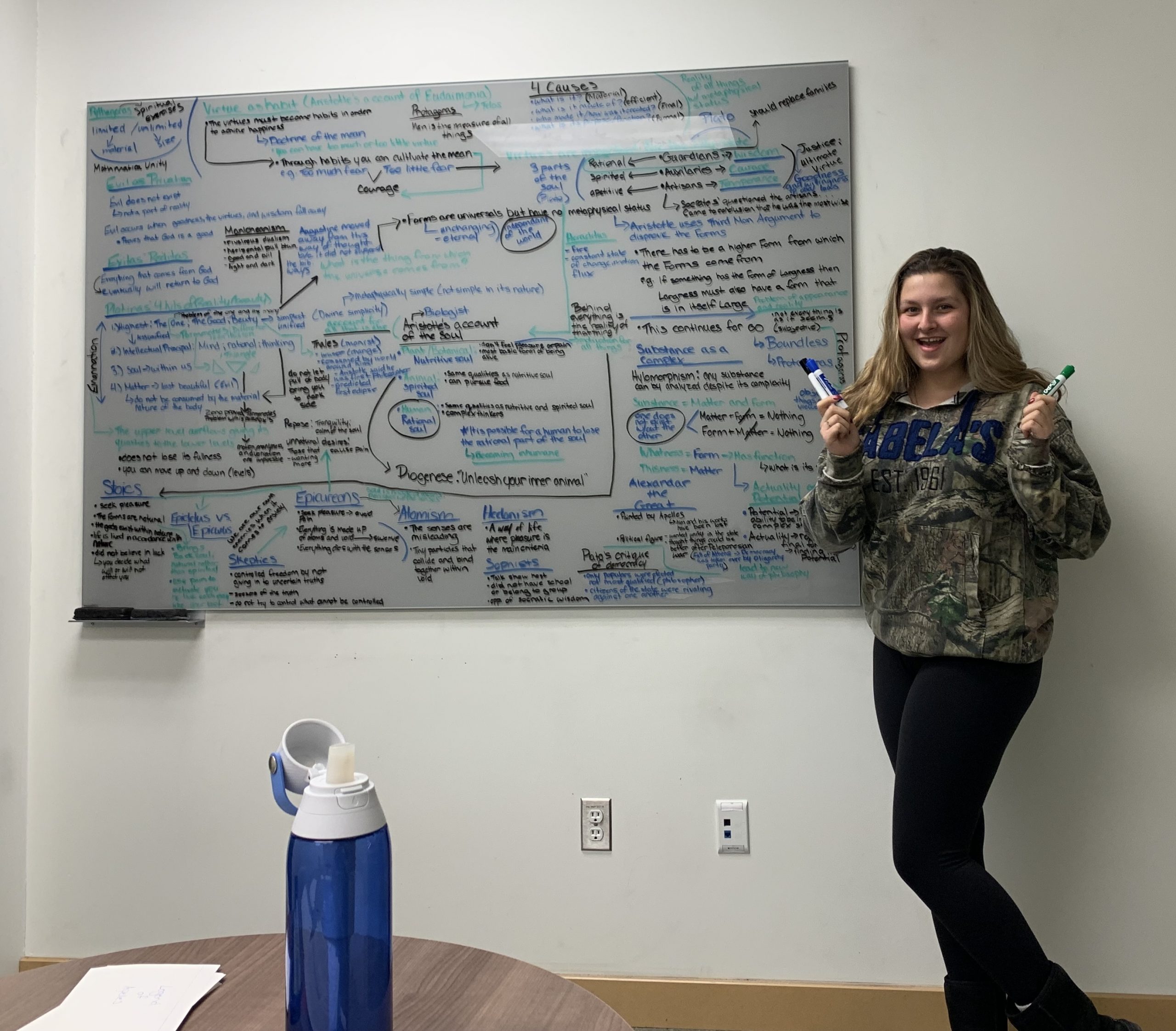
Before university, psychology to me was mostly about memorization: flashcards of theories and definitions, names matched with concepts. That changed almost immediately at CMU. My professors weren’t interested in us simply repeating information back—they wanted us to wrestle with it, to ask why it mattered and how it applied to real life. This shift was uncomfortable at first. It’s easier to memorize than to challenge your own assumptions. But the more I leaned into it, the more I realized how powerful it was. Psychology stopped being just an academic subject and became a lens for understanding my own life and relationships. I wasn’t just studying how people think and behave—I was learning to think differently myself.

3. Your professors will leave an impression

Another thing I didn’t expect was just how much my professors would influence me. They aren’t just knowledgeable—they’re passionate, engaging, and deeply invested in their students. More times than I can count, I got so caught up in their lectures that I forgot to take notes. What I remember most, though, is not just the content of what they taught, but how their delivery impacted me. They encouraged questions, welcomed curiosity, and modelled what it looks like to love learning for its own sake. Their example has shaped me more than any textbook ever could.

4. Stay open to new paths
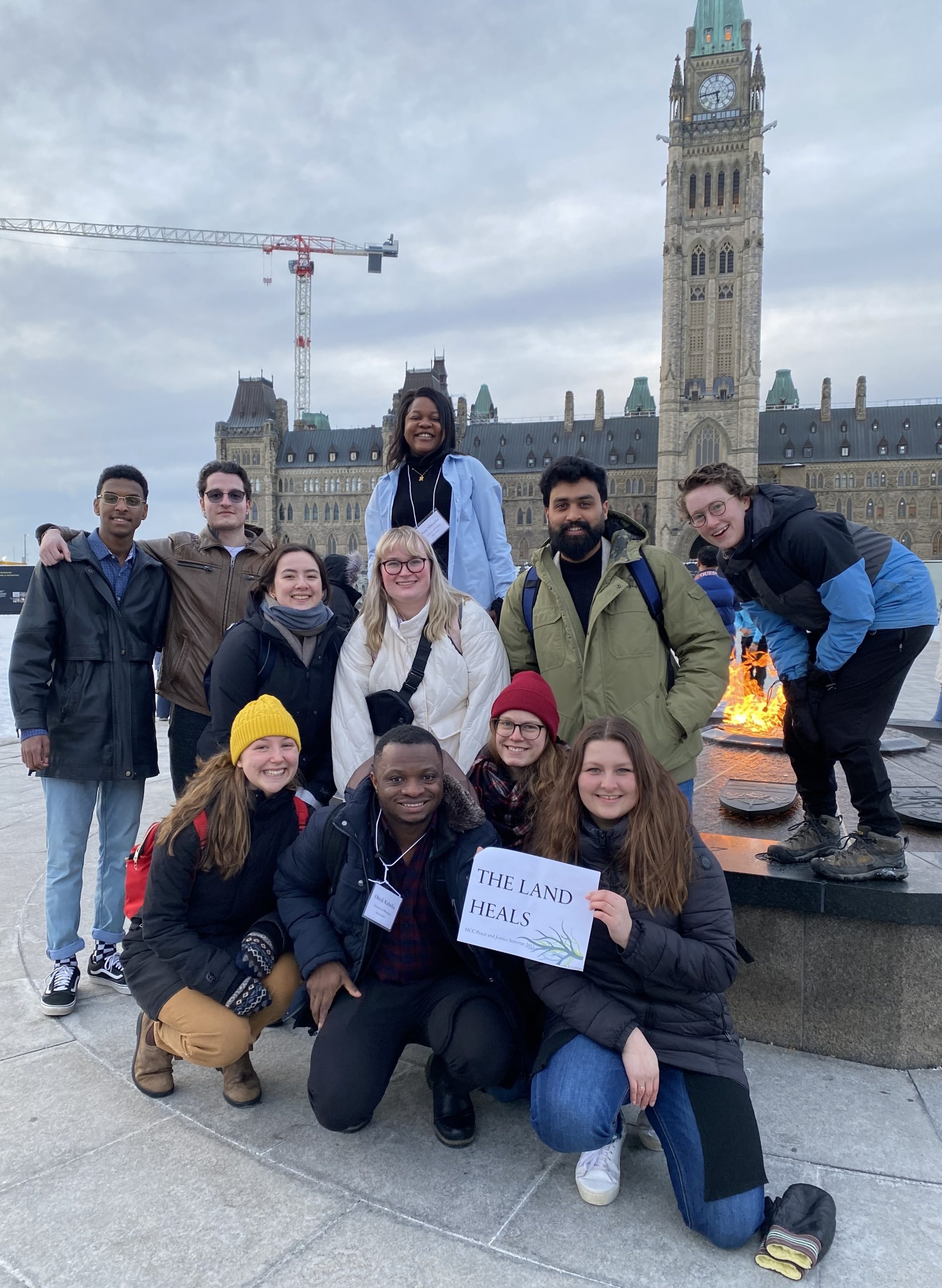
Along with a few CMU students, I attended an MCC conference in Ottawa titled, “Rooted in Right Relationship.”

One of the biggest lessons I’ve learned at CMU is just how many directions psychology can take you. I started out set on becoming a child life specialist, but courses in development, research methods, and even conversations with professors and classmates kept opening new doors—education, pediatric research, running a daycare, and recently, marriage and family therapy. At times, all this shifting left me worried that I was “behind” for not having one clear path. But I’ve realized that part of the gift of studying psychology at CMU is the freedom to explore. The variety of courses and the support of professors gave me space to rethink my goals and discover what excites me most. I may not have a single answer to “what’s next,” but I know my time here has prepared me for wherever I go.

Looking back

If I could sum up my time studying psychology at CMU, it would be this: it is less about fitting into the expectations you arrive with and more about being open to what unfolds. For me, that has meant discovering new disciplines, learning to think in deeper ways, being inspired by passionate mentors, and slowly piecing together who I want to become. It hasn’t been predictable, but it has been profoundly worthwhile. And if you’re just beginning your journey, I hope you’ll find the same: that the unknown is less something to fear, and more something to welcome.

Madeleine Lambert is a student in her final year of a Bachelor of Arts in Psychology.
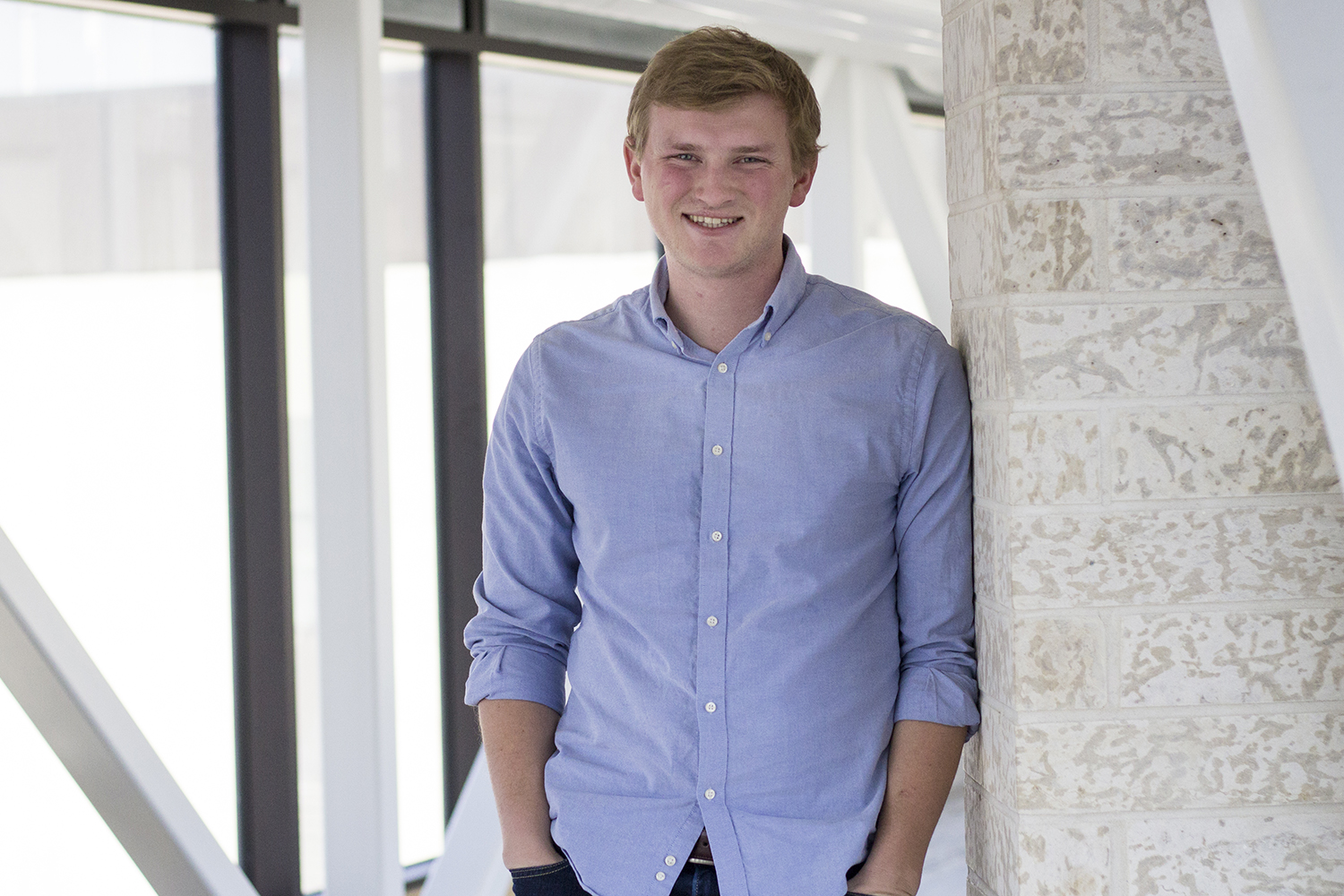
From a reluctant start: How CMU shaped my future

Nick Kehler - a Reluctant Start

I won’t lie – I was never planning on staying at CMU. I came in 2013, fresh out of Mennonite Collegiate Institute and I just wanted to play volleyball for a year, maybe two, and then I was going to go to “real” school at U of M.

This reluctant narrative is sort of what defines my CMU experience. At first, I was told of the wonders of CMU. The community, the class size, the opportunity for spiritual growth – it was all going to be awesome! But I didn’t really listen, I didn’t really care. Then, all of a sudden I was doing all these things and they were good.

So the “thesis” as it were (because this is a university after all) would be:

Everyone says it’s good. I didn’t want to, I didn’t think it would be good, and then all of a sudden I was doing it and it was good.

Small class sizes

I was told that classes were small and this was good: I was pretty nonplussed by this. I didn’t really care. Then I realized that this was actually a very good thing (though also a little challenging). I could talk to profs, get advice and all that good stuff. But this didn’t mean things were easy. Yes, I could bounce my ideas off my profs, but they could also stare at my soul and know that I had absolutely not done the readings for that day’s lesson. Also, in a class of 20, Delmar wouldn’t have a hard time noticing me falling asleep in the History of Psychology… not ideal.

Nick Kehler - a Reluctant Start

Practicum

I was told that practicum was helpful. Yikes, I really didn’t have a good attitude about this one. I did mine at Deer Lodge Centre which is a personal care home and hospital and I was doing work assisting occupational therapists and physiotherapists. This sort of work is what I want to do with the rest of my life and looking back now, I realize that this not only was great in terms of me affirming what the next chapter of my life looks like, it also looks pretty good on a resume or application.

Integrative courses

I was also told that integrative courses were awesome: I didn’t want to do them cause they all seemed like lots of work – now I know that these were likely the most unique, eye-opening, challenging, and rewarding classes that I took.

In my Psychology and Christianity course for example, we discussed questions like “are we soul and mind” are we “soul mind and body” or “just body?” Topics like the intersection of psychotherapy and faith were discussed and I came to quickly realize that there is no such thing as differentiating faith and the rest of life. It’s all wrapped together and it’s all super confusing and it’s all difficult and it’s all completely full of truths, half-truths, and caveats to everything that you can think of. This is perhaps the biggest takeaway from being here for the past few years. There isn’t a way to break things apart – things can’t just be categorized. In psychology, the study of human behaviour and cognition and interaction is intricately connected to God, the creator.

So, I was told many things, I didn’t really believe them. I eventually did those things anyways and now, looking back on all of that, I see that I’m a better person for it.

So how has CMU prepared me for life past university? I would say that it’s guided me and shaped me to think holistically – to think about God and people and relationships and research and everything in between, as connected – as influenced by and influencing each other.


Nick Kehler is a fourth year Psychology major graduating in April, and is from Altona, MB.


Perseverance and prayer: Finding my place in CMU’s Psychology program

When I came to CMU, my plan was to do sciences and later pursue a medical degree. But when I started my science classes, I realized that I really wasn’t that passionate about Sciences. I also didn’t perform particularly well so that would have hindered any plans of going to medical school.

Loma Mkhabela - Perseverance and Prayer: Finding My Place in CMU's Psychology Program

It took me a while to figure out what else I was passionate about. I knew that I wanted to be in a position where I was going to help people, but I was not certain what exactly that would look like.

At that time, I was on conditional continuance, since my grades weren’t that great, and I had to be really careful about how I went about choosing my courses. My grades were not all bad, though. I had good marks in most of the social science courses that I took, and I was advised by Wesley Toews to consider going into more social sciences courses to see whether that was the right fit for me. Turns out, I wasn’t that bad at social sciences, so I stuck with them.

I took my first psychology course in my second year, which is pretty late. But guess what? I absolutely enjoyed it and wanted to stick with it.

Now that I knew what I wanted to do, things seemed to be moving in the right direction. Psychology seemed like the best option for me; I still got to work with people, and that convinced me to pursue it.

My experience as a psychology student has been good. I’ve had the opportunity to learn more about myself while pursuing what I’m interested in. The psychology courses I’ve had the opportunity to take have been intriguing and informing, but also challenging. All the professors I’ve had so far have been good at keeping the courses interesting. I also like that I get to be taught by different professors who tend to connect their work experiences in psychology with the courses that they are teaching. It gives you an idea of what a career in psychology could look like.

Loma Mkhabela - Perseverance and Prayer: Finding My Place in CMU's Psychology ProgramNo one tells you this, but CMU has a very high standard of writing. Maybe not high, per se, but it requires more than what they teach you in high school. I had to learn how to write in APA (American Psychological Association) format. To this day, I still haven’t mastered how to do it and I continue to learn as I write more papers. You have to keep your pocket manual close as it becomes your best friend for the rest of your academic career.

I know I wouldn’t have gotten this far without my faith and belief in God. Through Him, all things are possible. Through the tough times, He has been constant. Prayer is a very powerful weapon, and as I have continued in my academic endeavours, that just seems to be truer. Keeping my trust and faith in Him and knowing that He has a plan for me has kept me going. It is also a testament that no matter how hard things seem to be, there is always a way.

Loma Mkhabela is in her fourth year of a Psychology degree at CMU.

Powered by WordPress & Theme by Anders Norén