Tag: science Page 1 of 2

Four things I wish I knew before studying science at CMU | Eleanor Reimer

The first thing you learn in a science degree is that there’s a lot you didn’t know that you didn’t know. In my opinion, that’s one of the best parts, and the science faculty at CMU are there for support along the way. Nevertheless, here are a few things that I wish I knew before beginning my science degree at CMU, so you can start yours with a bit more curiosity and confidence.

1. Science is about curiosity and creativity, not just memorization
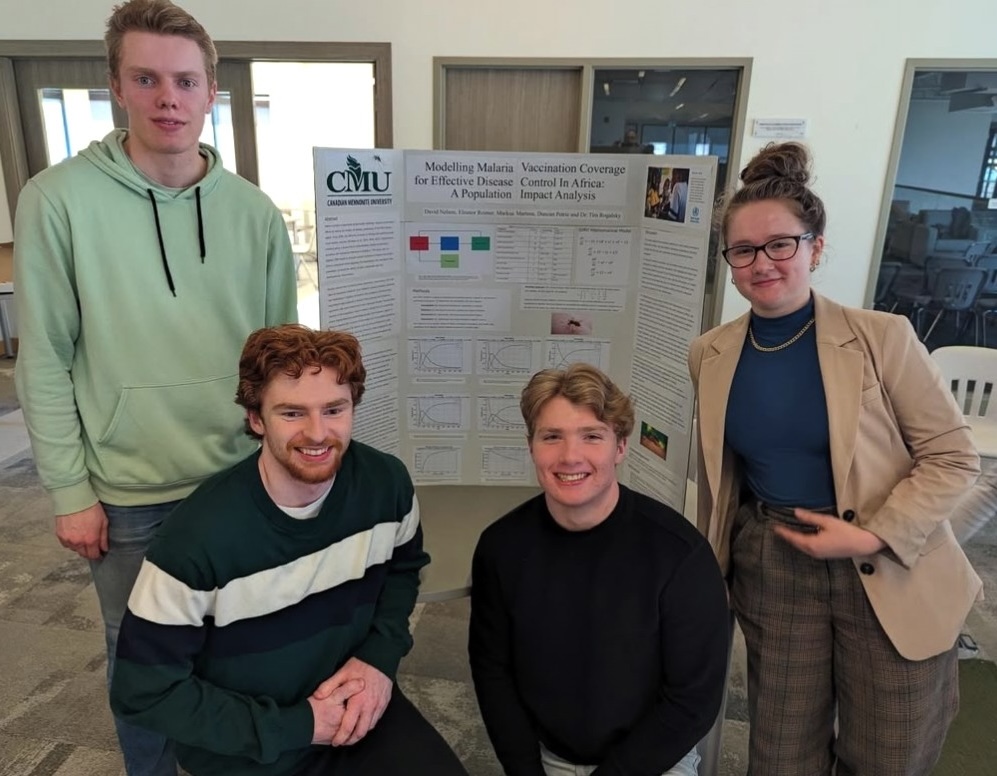
Professors at CMU emphasize building scientific literacy: the ability to understand and summarize scientific research, design experiments, and solve problems creatively.

Before I started my degree, I assumed success in undergraduate science meant perfectly recalling concepts like the citric acid cycle. Memorization matters (and yes, science students do have to memorize the citric acid cycle), but it’s only a small part of actually “doing science.” At CMU, professors emphasize building scientific literacy: the ability to read and understand scientific research, design experiments, and solve problems creatively. Throughout my coursework, I have learned to sift through complex scientific papers, write literature reviews, and draft research papers based on original research. I had the opportunity to apply these skills during my Work-Integrated Learning placement at the Children’s Hospital Research Institute of Manitoba, in the Healthy Smile Happy Child lab. There, I helped their team collect data from parents about their children’s oral health, assisted with dental screenings, and collaborated on a research paper alongside dentists and post-graduate researchers.

2. You have to write a lot!
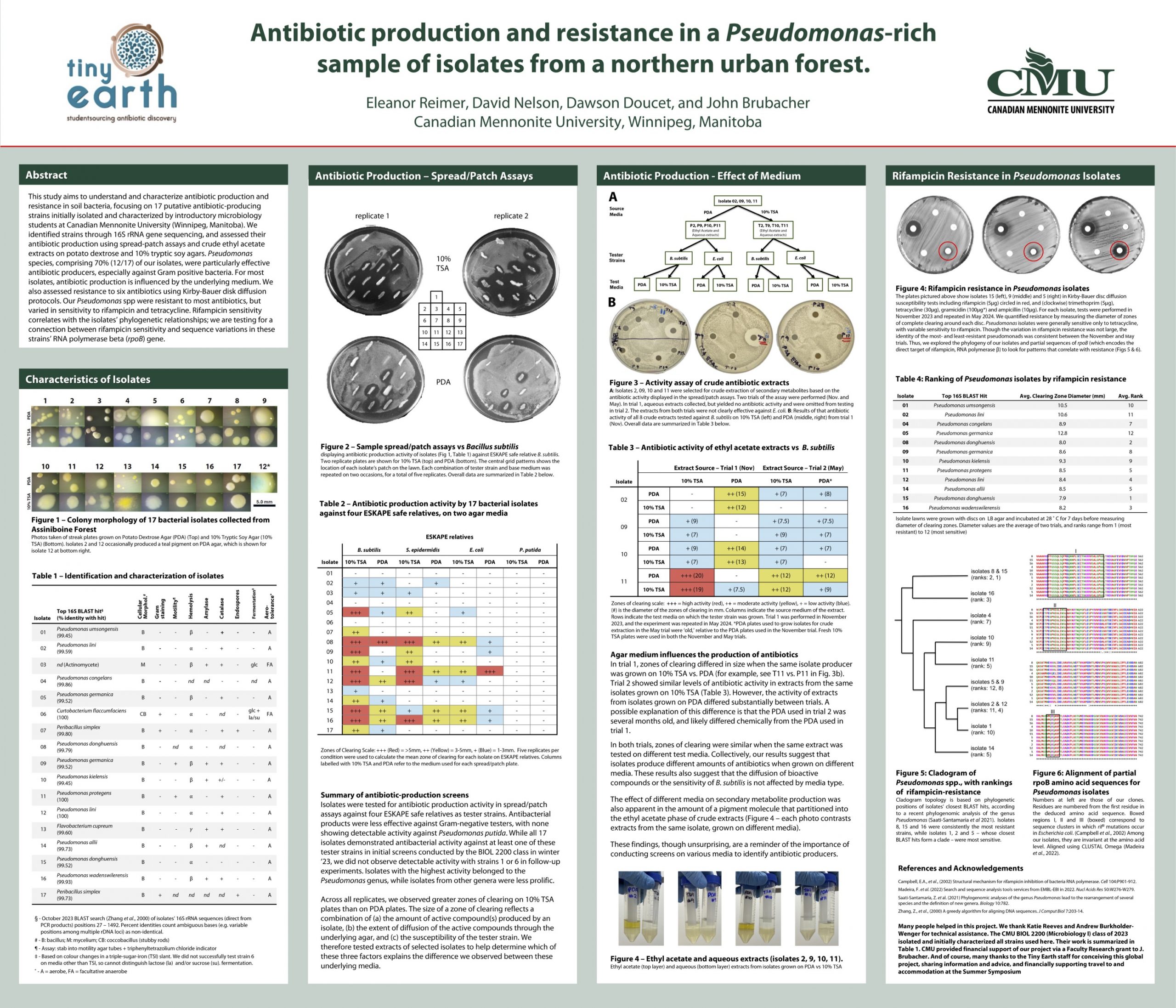
In my first independent study, I researched antibiotic resistance in soil bacteria, alongside two friends. This is our presentation of that research!

In order to “do” science, you must be able to write about it. Research papers are how scientists share discoveries and allow others to replicate studies, and learning how to do this starts in undergrad. Scientific writing, like creativity, is a skill to develop. It is a foundation of science communication. Whether you go on to work in research, healthcare, education, or any field where you need to make technical and scientific information understandable, strong writing skills are at the core. The emphasis CMU places on clear, evidence-based scientific writing has given me a foundation I hope to use in dentistry, whether I am contributing to research or explaining treatment plans to patients.

3. Asking professors about their research is a great way to learn
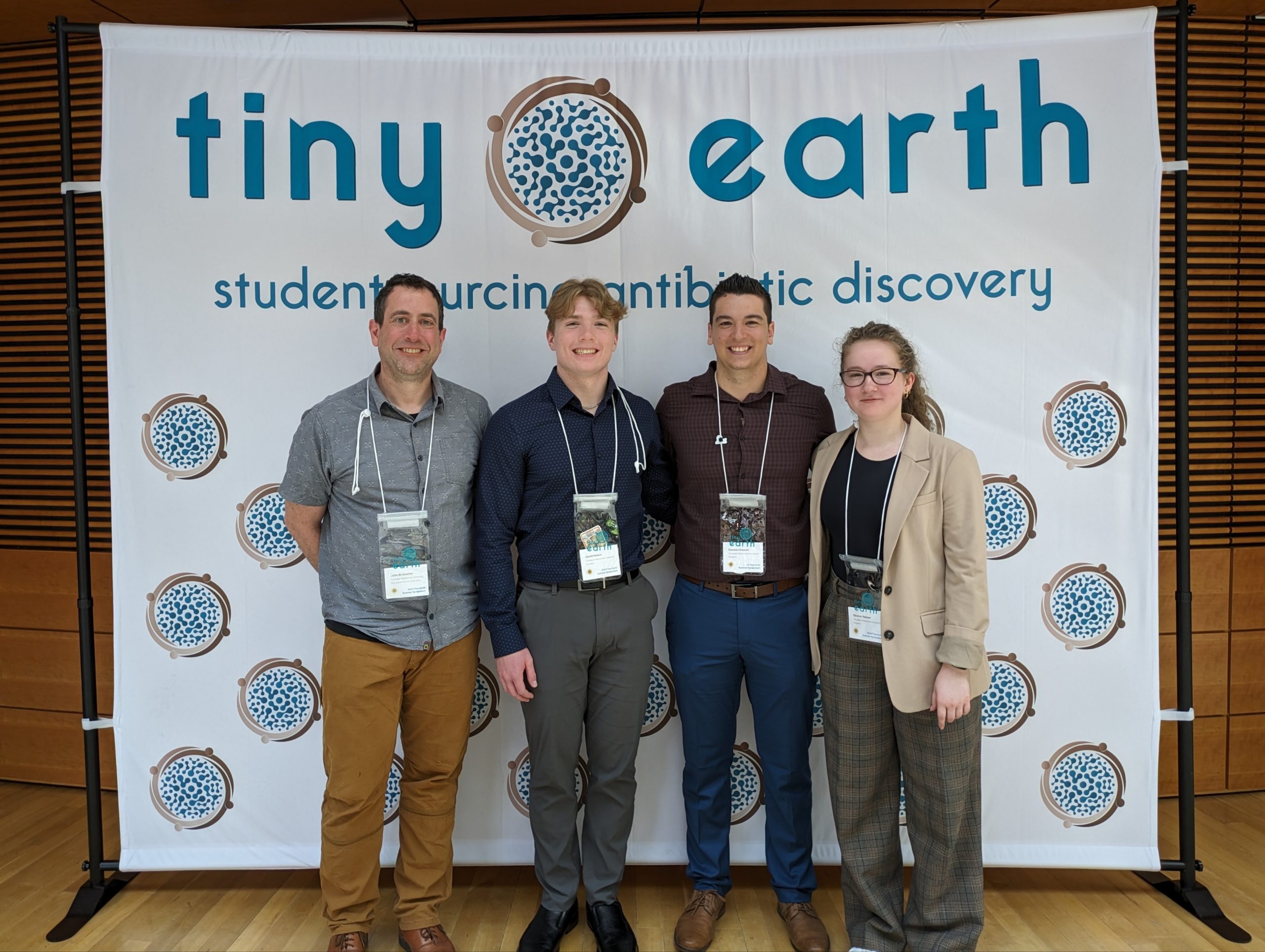
John Brubacher, Associate Professor of Biology (on the left), me (on the right), and my fellow student researchers and friends.

Professors at CMU love to talk to students about their research and their enthusiasm is contagious. Sitting down to have a conversation with someone about their graduate and post-graduate experience is a great way to figure out if it’s the right choice for you. CMU professors also have valuable networks. They are willing to connect students with people and opportunities related to student interests. This a great way to build your own connections, discover new career opportunities, or even just meet new people and chat about cool science topics. My first independent study came about because I was intrigued by a lab project in my microbiology course and asked my professor how I could dig deeper. Thanks to his and CMU’s emphasis on mentorship, I got to turn that curiosity into hands-on research, all because I asked a professor some questions. Which leads me to my next point!

4. An independent study is a great way to explore your interests, and worth the hard work!
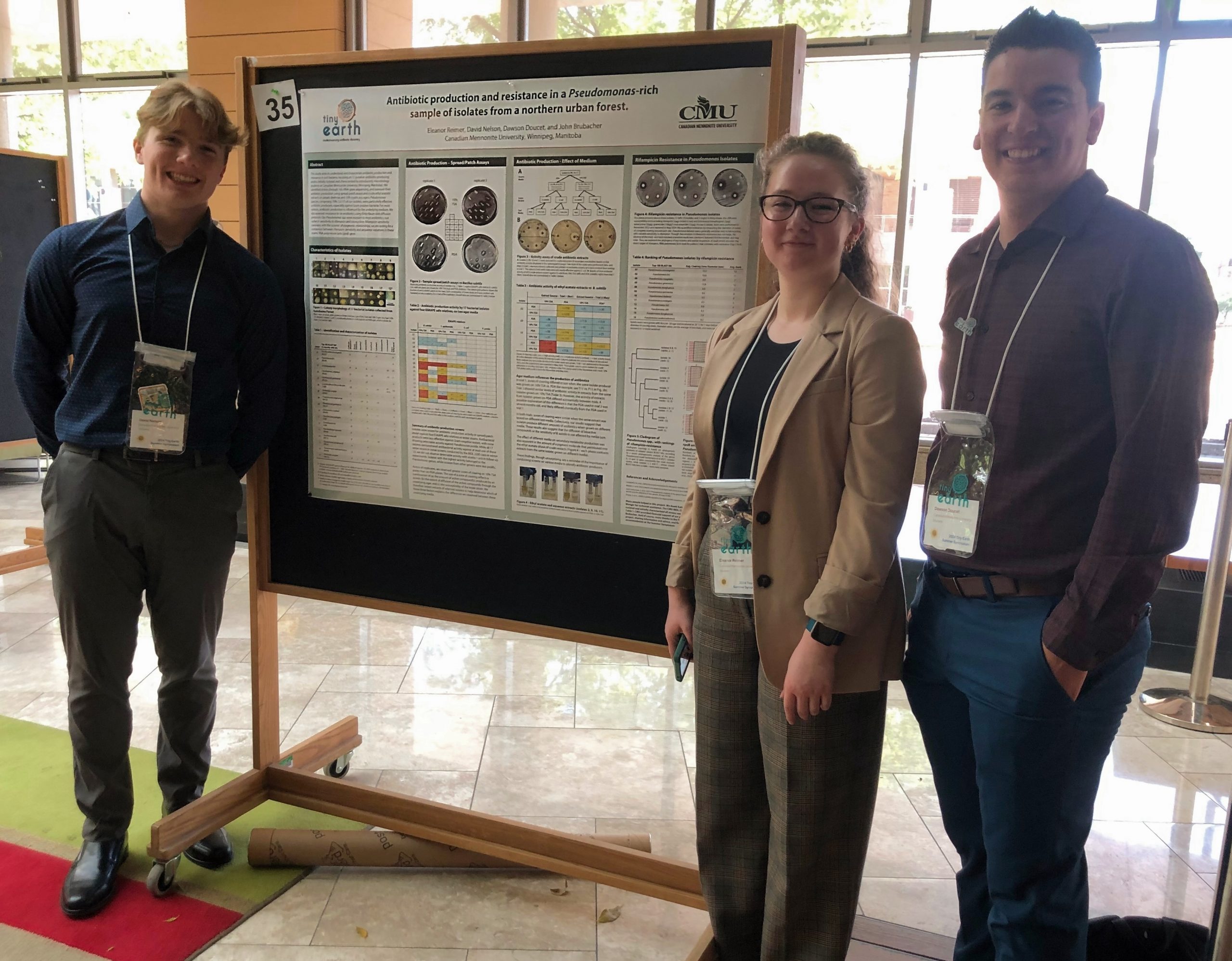
We CMU students presented our research at the Tiny Earth Summer Symposium, a scientific conference in Madison, Wisconsin.

One of the most rewarding parts of my degree was my independent study experience. In an independent study, you can propose a research project to a professor based on your interests and their area of expertise, kind of like a mini thesis project. In my first independent study, I researched antibiotic resistance in soil bacteria, alongside two friends. I gained new hands-on lab experience, even working on my own at times. This helped build my confidence in the lab and because I was doing original research, it gave me a glimpse into what research science as part of a career would look like. This project culminated in a presentation with some fellow students at the Tiny Earth Summer Symposium, a scientific conference held yearly in Madison, Wisconsin.

Not knowing these things in advance didn’t diminish my experience studying science at CMU. Everyone’s path through their degree looks a little different, and the challenge of not knowing everything beforehand is part of the university experience. My hope is that any future students reading this feel a little more prepared, but mostly excited about what science at CMU has to offer.

Eleanor Reimer is a fourth-year Bachelor of Science student, majoring in Biology.
How do math and peace relate? Four insights into studying math at CMU | Lia Campbell-Enns

Lia Campbell-Enns

“How do math and peace relate?” This question has lived in the back of my mind throughout my time at CMU. After high school, I was not sure what I wanted to study—chemistry, physics, math, or engineering? I knew I wanted to pursue the sciences but did not know which path I wanted to take. So, in my first year, I registered for four science courses each semester.

When my mom saw my all-science schedule, she suggested I add some non-science courses for balance. I kept Introduction to Calculus and Physics but added The Art of Music and Introduction to Peace and Conflict Transformation Studies. These two classes transformed my first year. They solidified my love of mathematics while broadening my perspective, helping me explore ethnomusicology and consider how conflict can be resolved peacefully. The ability to take a range of courses as a math major has allowed me to think outside the box and apply mathematical problem-solving to other disciplines, such as peace and conflict transformation studies.

“CMU’s math program is a small, supportive community,” Lia says.

Many opportunities have continued to present themselves, thanks to the supportive mathematics faculty. The CMU math program is small, which allows for flexibility and creativity. Sometimes it feels like a “choose your own adventure.” Looking back, here are four things I wish I had known before entering the math department at CMU:

  1.  Connecting with professors can open doors

    After my first year, opportunities arose that I had not expected. I was hired as a research intern to analyze data and create graphs for a biology professor; this work was eventually published. That fall, I also became a teaching assistant for Calculus, gaining firsthand experience in both teaching and leadership.

    In my third-year Introduction to Statistics class, Professor Tim Rogalsky allowed me to learn R, a programming language for data analysis, instead of the usual lab assignments. For my project, I applied hypothesis testing, confidence intervals, and linear regression to study annual working hours across Canada, Australia, and Cambodia. This gave me hands-on experience with real-world data while practicing key statistical techniques.

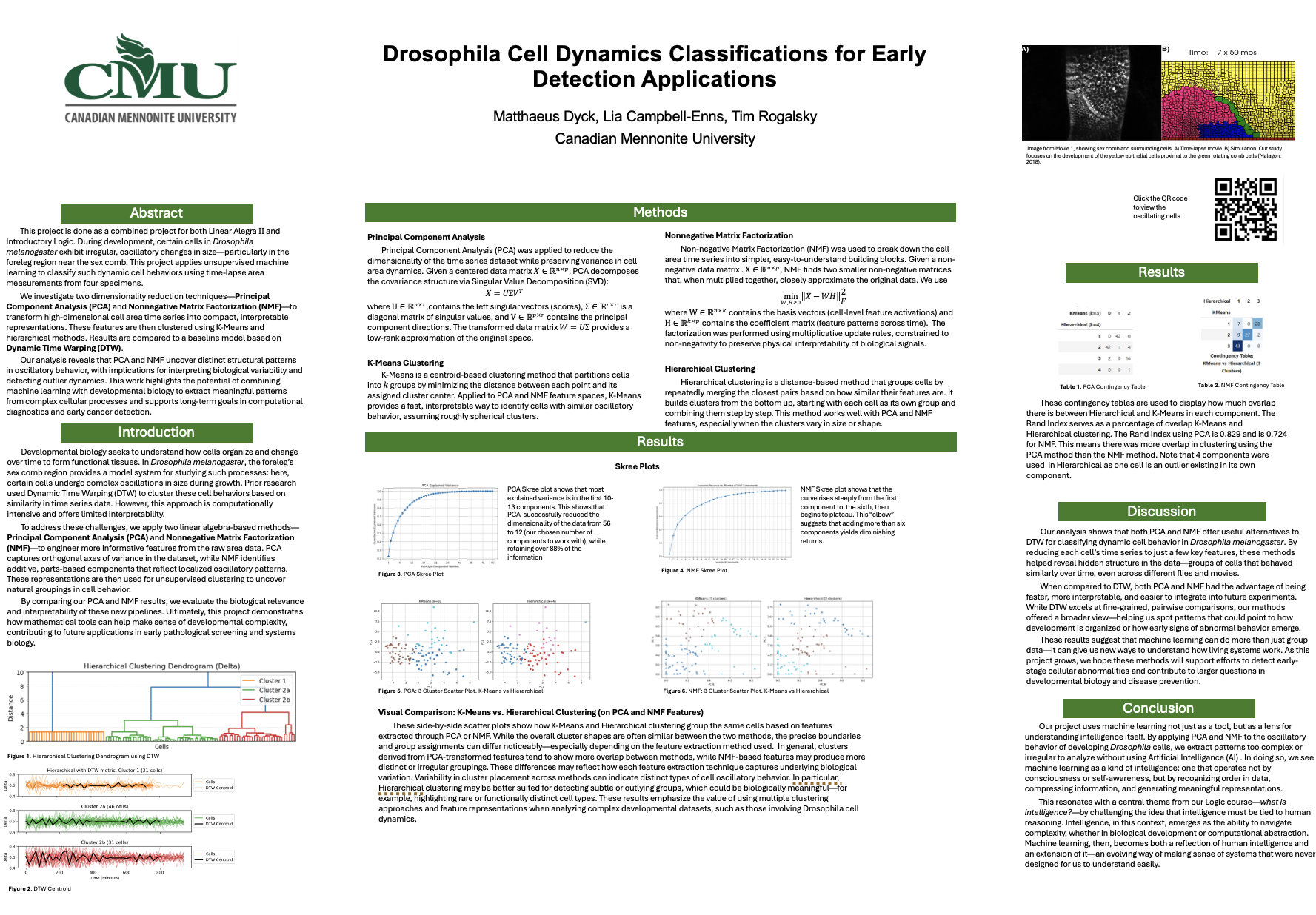
    I had final projects in two courses, Linear Algebra II and Introductory Logic. Tim suggested I combine them and collaborate with a friend to assist him with his research. We coded in Python, worked through multiple layers of analysis, and presented our findings at CMU’s Science Symposium and at a scientific conference.

  2. Forming study groups is essential

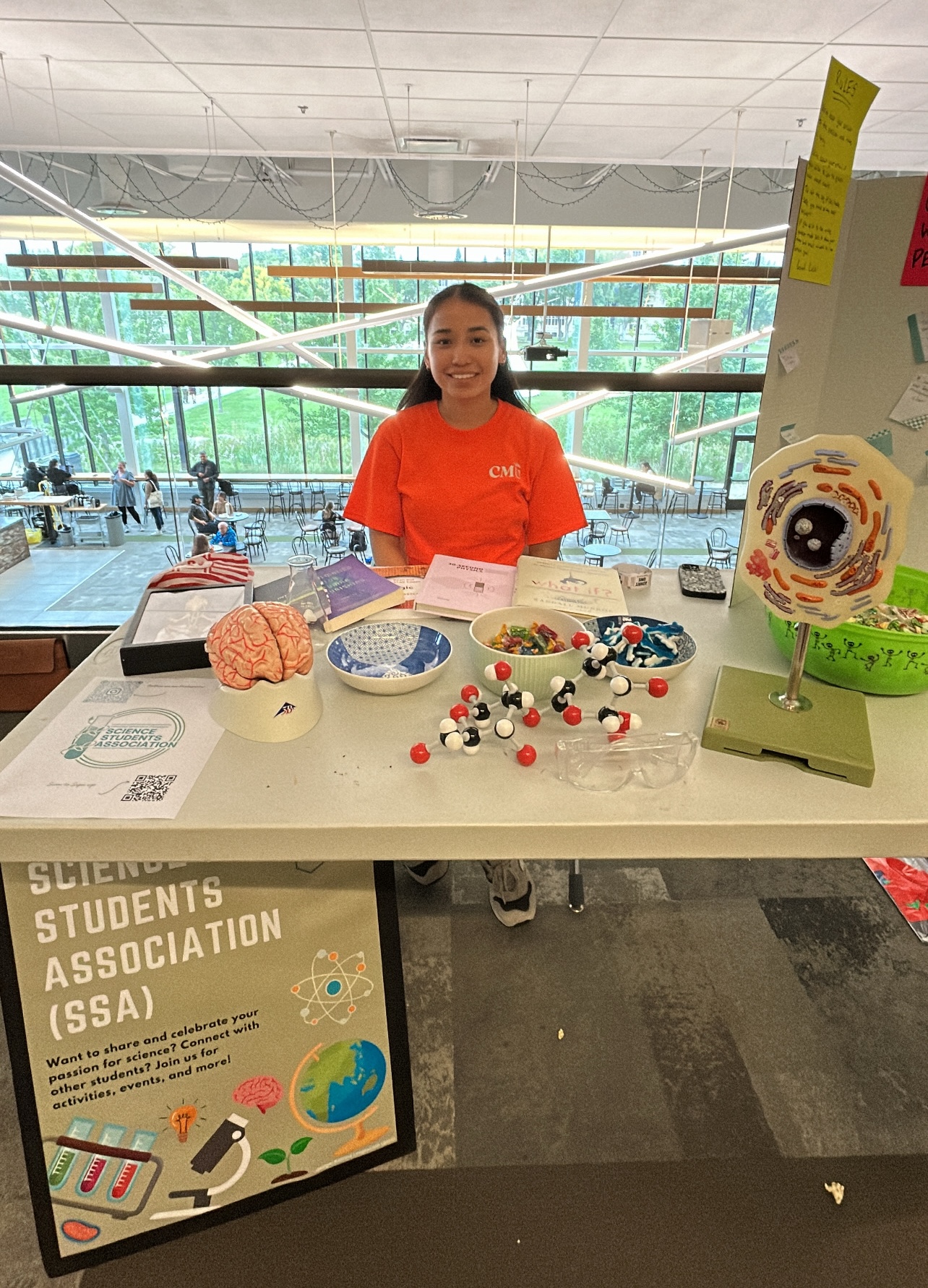
    In my first year, I took Physics with a few upper-year science students. They invited me to study groups, exchanged contact information, and became a support system. Through them, I joined the Science Students Association (SSA). With the SSA, I helped host a scientist in residence, met PhD students, connected with other science students, and developed leadership skills. I am now a co-leader of the SSA, where I enjoy meeting first-year students, planning science-related events, and connecting with others who share a passion for science.

  3. You can request courses that are not normally offered

    In high school, physics was my favourite class, but second-year courses like Electromagnetic Field Theory and Biophysics are not regularly available at CMU. When a small group of students expressed interest, however, the faculty arranged to offer them. At CMU, professors take a personal interest in students’ goals, creating unique opportunities tailored to what we are excited about.

  4. AI can be a tutor, not just a tool

    I have also learned to use AI as a tutor rather than a shortcut. In my math classes, I practice guiding AI to ask me questions that challenge my understanding, helping me think critically and solve problems step by step. In today’s world, it is also important to think critically about AI—its potential, its ethics, and its limitations. CMU encourages this reflective approach, helping students engage with technology thoughtfully.
Lia’s final project for Linear Algebra II and Introductory Logic.

The flexibility of CMU’s mathematics program has allowed me to dive into topics I care about and apply insights from other disciplines. As a minor in Peace and Conflict Transformation Studies (PACTS), I have seen how both fields center on problem solving. Math teaches structured, logical solutions, while PACTS explores negotiation, ethics, and human-centered reasoning. Together, they show that problem solving can bridge technical challenges and human relationships.

CMU’s math program is a small, supportive community that adapts to students’ interests, encouraging exploration beyond mathematics. Connecting with people, nature, and music grounds my studies and allows me to consider the consequences, challenges, and ethics behind complex mathematical questions. At CMU, math and peace are connected through the shared pursuit of understanding, thoughtful problem solving, and making a positive impact on the world.

Lia Campbell-Enns is a fourth-year Bachelor of Science student, majoring in Mathematics.

From music to microscopes | Guest blogger Malcolm Reimer

As a student ambassador for CMU, I spend an evening a week having conversations on the phone with grade 12 students from across Canada. Almost all of the time, I talk to two kinds of people about their post-secondary plans, goals, and dreams.

The first type are those rare students who seem to know exactly what they’re going to do with their lives: the aspiring doctors, nurses, and veterinarians. They’re often the hyper-motivated ones, and they’re probably admired by the adults and teachers around them and ever-so-slightly feared by their classmates.

The other type, the wide majority of students I talk to, are the ones who don’t really know what they’re going to do with the rest of their life and would like it if you would stop interrogating them about their future, thank you very much. These students, like most of my classmates in grade 12, haven’t made solid plans for university or work yet and aren’t sure what they want to do.

So if you’ve ever been asked about your future and have no clue how to respond, I feel your pain. One of my friends in high school got so tired of being asked what she “wanted to be” by everyone she met, she resorted to one answer: a pirate. In my opinion, that’s actually not a bad choice.

I enrolled at CMU in the Bachelor of Music program, taking classes like Music Theory and Music Skills and History of Music… you get the idea: all music, all the time. In grade 12 I had auditioned on the piano for CMU’s School of Music, and I had a picture in mind of becoming a music teacher or band director, like the teachers I’d most admired in high school. I wasn’t really sure this was the right choice, but it was enough of a plan for a first year. I knew that I wanted to study music, so I did.

CMU students Anna Schwartz and Malcolm Reimer

What I wasn’t expecting was that even though I was in a relatively structured program, taking mostly pre-determined courses, I would end up discovering some entirely different interests. I took a biology course as an elective, just because I liked biology and I had the high school prerequisites.

But as I continued with the course, I found that I was more and more interested in science. I had the chance to have deep conversations with professors who worked in their fields and who could answer questions about potential careers. My professors were researching interesting things like self-regenerating flatworms and strange parasites that live inside three different animal hosts over their lives.

The more I talked to them and the people in my biology classes, the more I found myself drawn to the whole field. By the end of the semester, I was more conflicted about what I “wanted to do” than at the beginning. By the end of the school year, I was ready to switch majors.

This often surprises people, and I get a lot of questions about how it was possible to make such a big change in my university plan. The answer is that I would never have been able to make that choice confidently without all the resources that CMU offers, from academic advising to career planning and everything in between.

If you’re a high school student perilously close to graduation, you know there’s a ton of pressure to have a plan for your career and life, or at least that’s what it feels like. Choosing a university and a degree can seem like a massive, life-changing decision.

But no matter what classes you take at university, the most important part is not the material you’ll learn. What’s far more valuable are the skills you develop in those classes and the things you discover along the way. University can reveal new options you never considered before.

– Malcolm Reimer, 2nd-year Science student

Seasons: Are you living in the now?

“For everything there is a season, and a time for every matter under heaven: a time to be born, and a time to die; a time to plant, and a time to pluck up what is planted; a time to kill, and a time to heal; a time to break down, and a time to build up; a time to weep, and a time to laugh; a time to mourn, and a time to dance; a time to cast away stones, and a time to gather stones together; a time to embrace, and a time to refrain from embracing…” -Ecclesiastes 3:1-22

Seasons. Each season brings a different flavour and atmosphere to our life. Like seasons of the year, each season of life holds positives and negatives. The beauty of the colours and smells of autumn also contain a chill and darkened evenings. Summer provides hot sun and luscious greenery, but mosquitoes are also a reality. We must choose what we will dwell on. How can one enjoy skating in the winter when all they can think about is swimming in the summer? Lately, I have been reflecting on my first year of university at CMU and the way that I experienced that season of my life. 

Anna Richard - Season: Are you Living in the Now?

It was somewhat of a wild year. In April, I finished a very busy first year of pre-nursing studies. Like any full-time, first-year student, there was so much to juggle and constantly keep up with. Having homeschooled for my entire previous education, I found that I was continuously just trying to prove to myself that I could indeed succeed, pass exams, handle labs and attain the grades I wanted.

For both the fall and winter semesters, I lived and breathed being productive. There was always another assignment, lab report, exam and so on. Every available evening was spent studying until I sleepily packed lunch to take with me when I would wake early to bus to school in the morning. However, there was also a lot of positive and wonderful things that I experienced during this time. As the year went on I made close friends with whom I shared much laughter, tears, and inside jokes. I navigated new and exciting relationships. I have many memories of being exhausted and uncontrollably laughing when I wasn’t supposed to during Wednesday night chemistry labs.

During that season of life, however, I spent a lot of time focusing on everything I didn’t like about being busy with school. I felt over-stimulated, longing for the day of my last exam when I would finally be DONE with the studying and stress. I would repeatedly think, when I’m finally done this year and working a summer job, then I’ll truly be able to enjoy life. When I can finally spend my evenings the way I’d like to, I’ll feel balanced again. When I no longer have the stress of assignments, life will be much brighter and hopeful.

And now my summer is coming to an end. I’ve been working at my two part-time summer jobs, and I’ve had lots of free evenings with plenty of time to myself. Guess what? Even though I have enjoyed the freedom and joy of feeling less pressured, I’ve often had moments of experiencing boredom and a lack of meaning. Some days I have felt somewhat lonely and empty even though I have been able to see my friends often.

I have filled my extra hours with activities I enjoy such as gardening, playing guitar and reading. But I have still felt a bleak sense of aloneness. Instead of taking advantage of the rest and recuperation this season brings, I have found myself at times focusing on the parts I don’t like. I have caught myself thinking about future times that will finally “make me happy”. I’ve even started looking forward to the busyness of my second year of university.

Anna Richard - Season: Are you Living in the Now?

Then the Holy Spirit gently reminds me about the beauty of living in the present moment. God is with us in the now. If we spend each season of life looking forward to the next, we completely miss out on the opportunity to embrace the gift of this moment, the beauty of now. When we choose to acknowledge the struggles of the seasons we’re in and embrace the joys, we can become aware of the signs of God’s presence that are only visible to one who is conscious of the present.

Here are three strategies that I’ve found helpful to living in the present, and I invite you to apply these to your daily life as you begin your year at CMU:

  1. Everyday, find at least three things that you are truly grateful to God for in this time of your life. This sounds quite cliché, but honestly, do it. Write them down or thank God for them out loud.
  2. When you catch yourself thinking ahead about a time you look forward to, acknowledge the thought and place it in God’s hands. Remind yourself to focus on what you’re experiencing right now.
  3. If you’re really struggling with the season of life you’re in, tell God. Tell him all the things you don’t like about it (he can take it!). But then thank him for what he’s doing in the situation, even if you don’t know what that is. Thank him for the good he’s going to make of the struggle.

As you enter in to this year of university, I invite you to embrace the present moment in this season of your life. This year may seem stressful and overwhelming, but I promise you there is much beauty to be experienced at this time in your life. This time of stress, hard work, and yet amazing community will never repeat itself in the same way.

Anna Richard is entering her second year of Pre-professional studies in Nursing at CMU.

Diversity and connection: Environmental Studies at CMU

For the pasGraham Peterst two years, I have been enrolled in the Environmental Studies program at CMU, and it has been an exciting time in my education.
My first year started with general biology courses designed to cover as much information as possible. These courses opened a window into the fascinating world of life. From cells to basic body structure, we learned the complex inner workings that make up all living things, and how closely all life is interconnected. I was introduced to a world with many similarities between living things, that is still astoundingly diverse.

As my studies become more focused on particular subjects, the learning becomes more difficult, and more intriguing. The world that I was introduced to in first year biology has become more complex, and the continuity between classes is fascinating. Each class seems to complement the other. Learning about genes and how they are handed down in one class, blends into another on how diversity within a species is possible. As the classes become more focused, topics begin to fit together more clearly.

201412 Education-CMU (8)

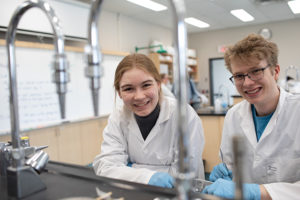
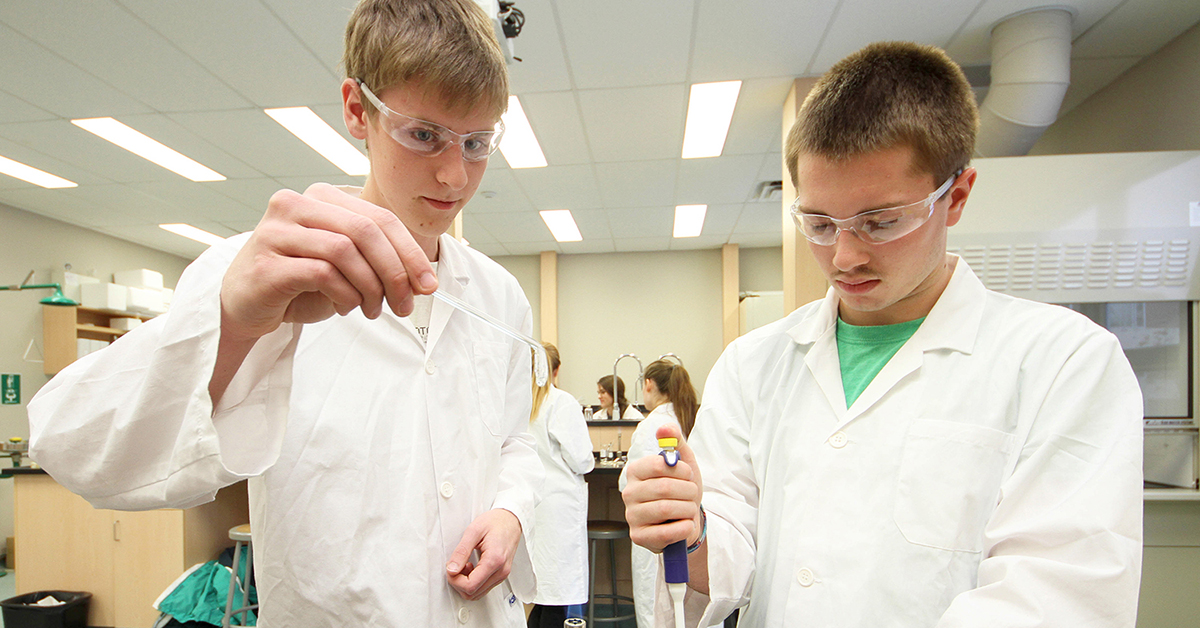
All this is enhanced by the work that is done in the lab. Classroom learning suddenly becomes real, as we are able to observe the characteristics of different plant, animal, and bacteria species right before our eyes. The lines between the textbook and the lab became blurred. Both are learning environments in their own right, but together they enhance my understanding experience. Each setting offers new insights into an ever expanding area of study, and it probably helps that the professors in the classroom also teach in the lab.

Maybe more helpful than the classroom learning and the time spent in the lab, is the time spent in the field. Classes are encouraged to go out and experience the nature that we are learning about. We are constantly encouraged to learn within the natural spaces around us. The Assiniboine Forest offers a unique space to learn and observe. This opportunity makes lessons and experiments tangible.

1P5C4988s

Unique to CMU are the integrative classes that teach about the Bible and the natural world, in which students can explore the environment from a theological and ethical perspective. We learn how people ought to live with creation and learn the beauty of it through both science and theology.

Every aspect of my education at CMU is connected to a larger whole. It’s  less a collection of pieces of knowledge, but the formation of a whole, giving me a glimpse at the bigger picture of creation. Each course offers a unique exploration of a subject within environmental studies, and at the same time, they all are closely interconnected. The labs and diverse classes have helped me build my own knowledge of the environment, and I plan to take it forward with me as I continue learning.

Graham Peters is a third year Environmental Studies student from Winnipeg, Manitoba.

Page 1 of 2

Powered by WordPress & Theme by Anders Norén