Tag: bachelor of science

Four things I wish I knew before studying science at CMU | Eleanor Reimer

The first thing you learn in a science degree is that there’s a lot you didn’t know that you didn’t know. In my opinion, that’s one of the best parts, and the science faculty at CMU are there for support along the way. Nevertheless, here are a few things that I wish I knew before beginning my science degree at CMU, so you can start yours with a bit more curiosity and confidence.

1. Science is about curiosity and creativity, not just memorization
Professors at CMU emphasize building scientific literacy: the ability to understand and summarize scientific research, design experiments, and solve problems creatively.

Before I started my degree, I assumed success in undergraduate science meant perfectly recalling concepts like the citric acid cycle. Memorization matters (and yes, science students do have to memorize the citric acid cycle), but it’s only a small part of actually “doing science.” At CMU, professors emphasize building scientific literacy: the ability to read and understand scientific research, design experiments, and solve problems creatively. Throughout my coursework, I have learned to sift through complex scientific papers, write literature reviews, and draft research papers based on original research. I had the opportunity to apply these skills during my Work-Integrated Learning placement at the Children’s Hospital Research Institute of Manitoba, in the Healthy Smile Happy Child lab. There, I helped their team collect data from parents about their children’s oral health, assisted with dental screenings, and collaborated on a research paper alongside dentists and post-graduate researchers.

2. You have to write a lot!
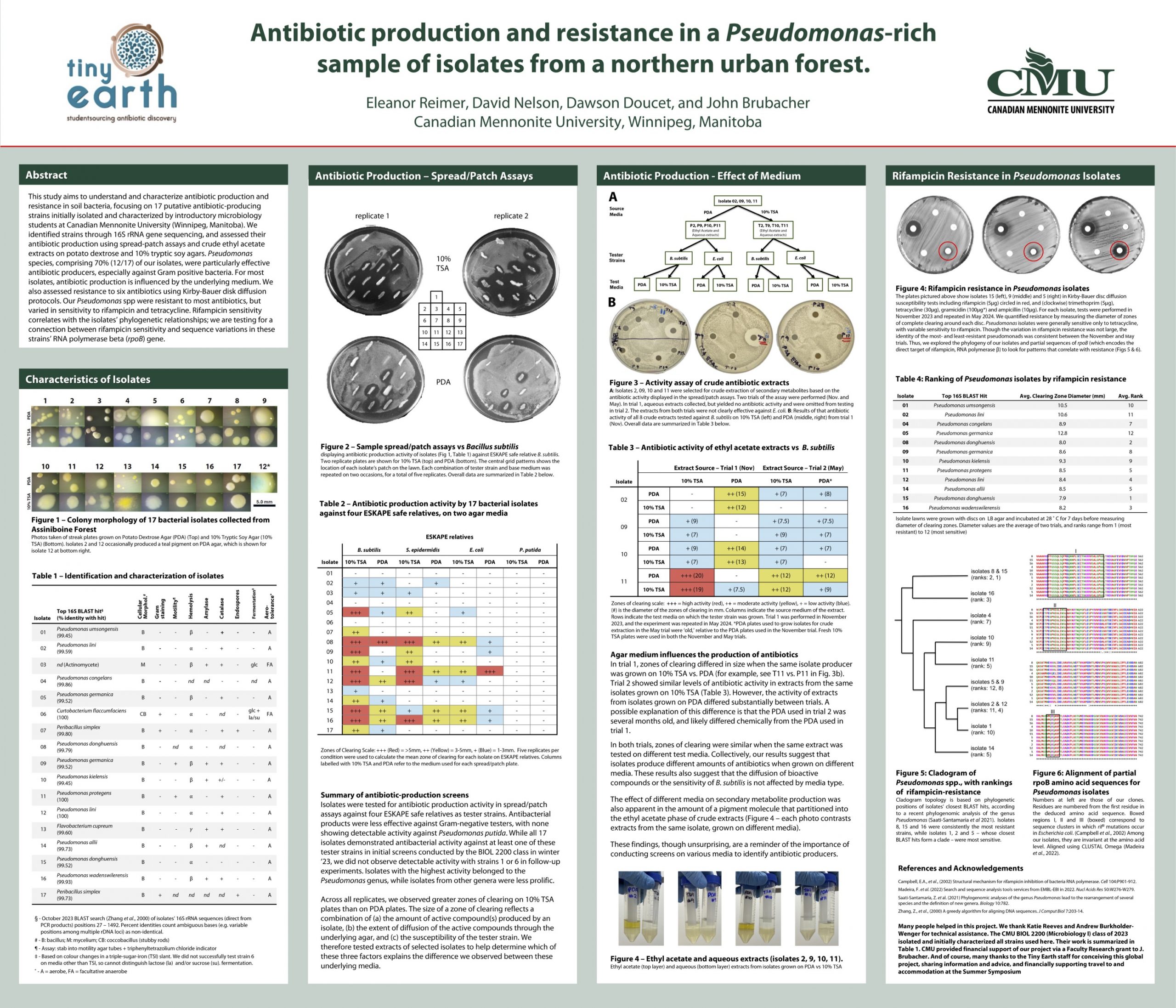
In my first independent study, I researched antibiotic resistance in soil bacteria, alongside two friends. This is our presentation of that research!

In order to “do” science, you must be able to write about it. Research papers are how scientists share discoveries and allow others to replicate studies, and learning how to do this starts in undergrad. Scientific writing, like creativity, is a skill to develop. It is a foundation of science communication. Whether you go on to work in research, healthcare, education, or any field where you need to make technical and scientific information understandable, strong writing skills are at the core. The emphasis CMU places on clear, evidence-based scientific writing has given me a foundation I hope to use in dentistry, whether I am contributing to research or explaining treatment plans to patients.

3. Asking professors about their research is a great way to learn
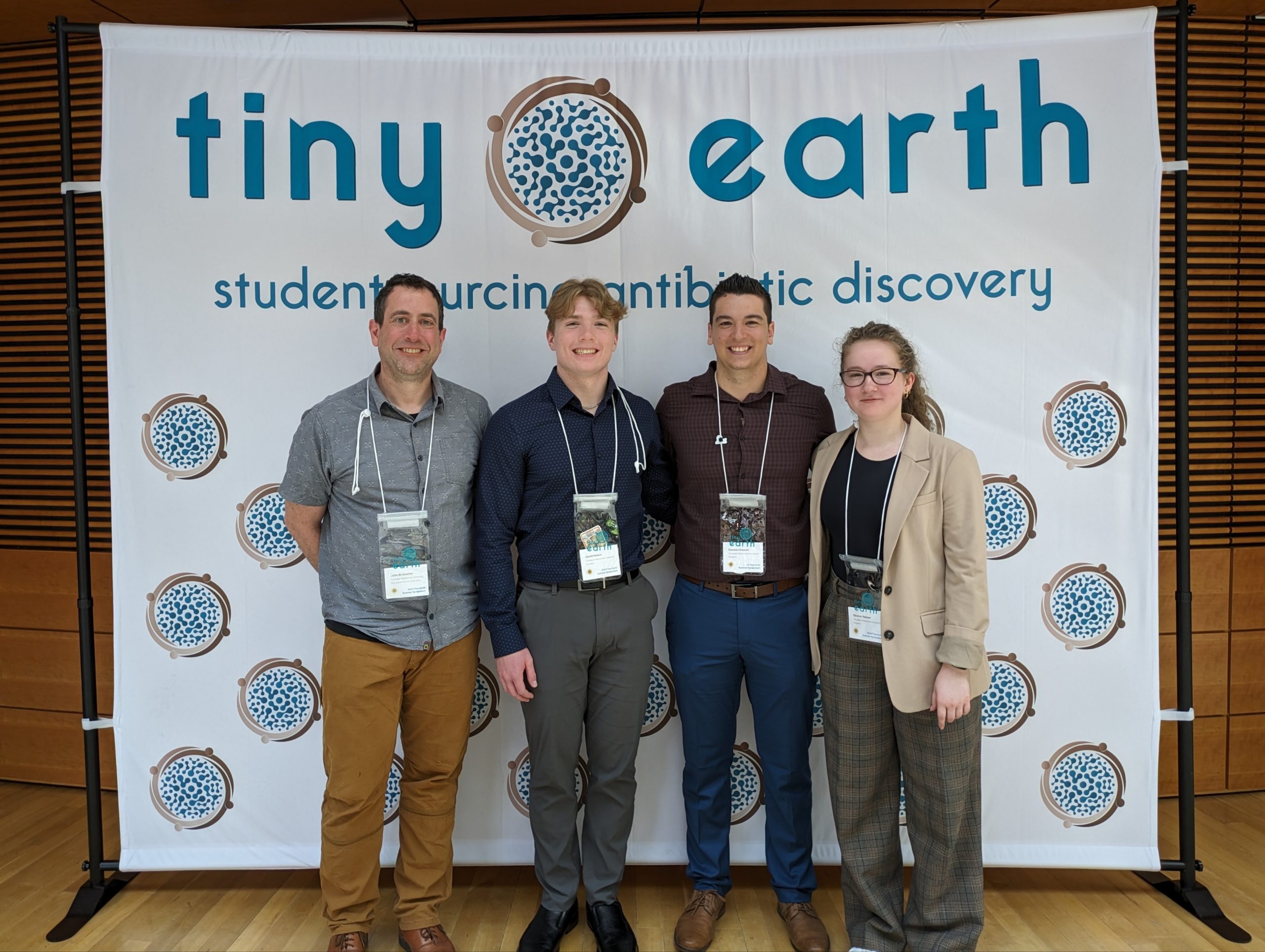
John Brubacher, Associate Professor of Biology (on the left), me (on the right), and my fellow student researchers and friends.

Professors at CMU love to talk to students about their research and their enthusiasm is contagious. Sitting down to have a conversation with someone about their graduate and post-graduate experience is a great way to figure out if it’s the right choice for you. CMU professors also have valuable networks. They are willing to connect students with people and opportunities related to student interests. This a great way to build your own connections, discover new career opportunities, or even just meet new people and chat about cool science topics. My first independent study came about because I was intrigued by a lab project in my microbiology course and asked my professor how I could dig deeper. Thanks to his and CMU’s emphasis on mentorship, I got to turn that curiosity into hands-on research, all because I asked a professor some questions. Which leads me to my next point!

4. An independent study is a great way to explore your interests, and worth the hard work!
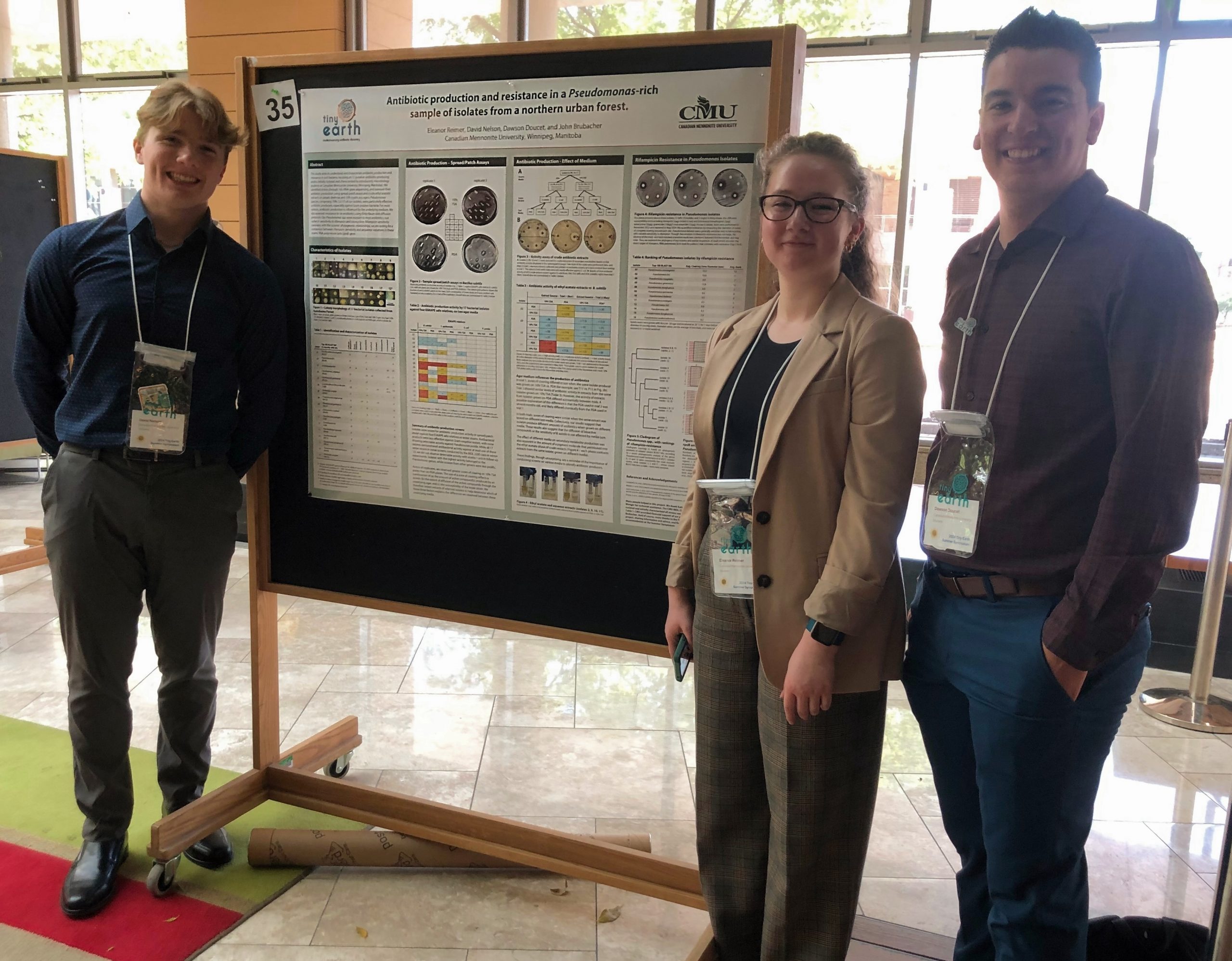
We CMU students presented our research at the Tiny Earth Summer Symposium, a scientific conference in Madison, Wisconsin.

One of the most rewarding parts of my degree was my independent study experience. In an independent study, you can propose a research project to a professor based on your interests and their area of expertise, kind of like a mini thesis project. In my first independent study, I researched antibiotic resistance in soil bacteria, alongside two friends. I gained new hands-on lab experience, even working on my own at times. This helped build my confidence in the lab and because I was doing original research, it gave me a glimpse into what research science as part of a career would look like. This project culminated in a presentation with some fellow students at the Tiny Earth Summer Symposium, a scientific conference held yearly in Madison, Wisconsin.

Not knowing these things in advance didn’t diminish my experience studying science at CMU. Everyone’s path through their degree looks a little different, and the challenge of not knowing everything beforehand is part of the university experience. My hope is that any future students reading this feel a little more prepared, but mostly excited about what science at CMU has to offer.

Eleanor Reimer is a fourth-year Bachelor of Science student, majoring in Biology.
How do math and peace relate? Four insights into studying math at CMU | Lia Campbell-Enns

Lia Campbell-Enns

“How do math and peace relate?” This question has lived in the back of my mind throughout my time at CMU. After high school, I was not sure what I wanted to study—chemistry, physics, math, or engineering? I knew I wanted to pursue the sciences but did not know which path I wanted to take. So, in my first year, I registered for four science courses each semester.

When my mom saw my all-science schedule, she suggested I add some non-science courses for balance. I kept Introduction to Calculus and Physics but added The Art of Music and Introduction to Peace and Conflict Transformation Studies. These two classes transformed my first year. They solidified my love of mathematics while broadening my perspective, helping me explore ethnomusicology and consider how conflict can be resolved peacefully. The ability to take a range of courses as a math major has allowed me to think outside the box and apply mathematical problem-solving to other disciplines, such as peace and conflict transformation studies.

“CMU’s math program is a small, supportive community,” Lia says.

Many opportunities have continued to present themselves, thanks to the supportive mathematics faculty. The CMU math program is small, which allows for flexibility and creativity. Sometimes it feels like a “choose your own adventure.” Looking back, here are four things I wish I had known before entering the math department at CMU:

  1.  Connecting with professors can open doors

    After my first year, opportunities arose that I had not expected. I was hired as a research intern to analyze data and create graphs for a biology professor; this work was eventually published. That fall, I also became a teaching assistant for Calculus, gaining firsthand experience in both teaching and leadership.

    In my third-year Introduction to Statistics class, Professor Tim Rogalsky allowed me to learn R, a programming language for data analysis, instead of the usual lab assignments. For my project, I applied hypothesis testing, confidence intervals, and linear regression to study annual working hours across Canada, Australia, and Cambodia. This gave me hands-on experience with real-world data while practicing key statistical techniques.

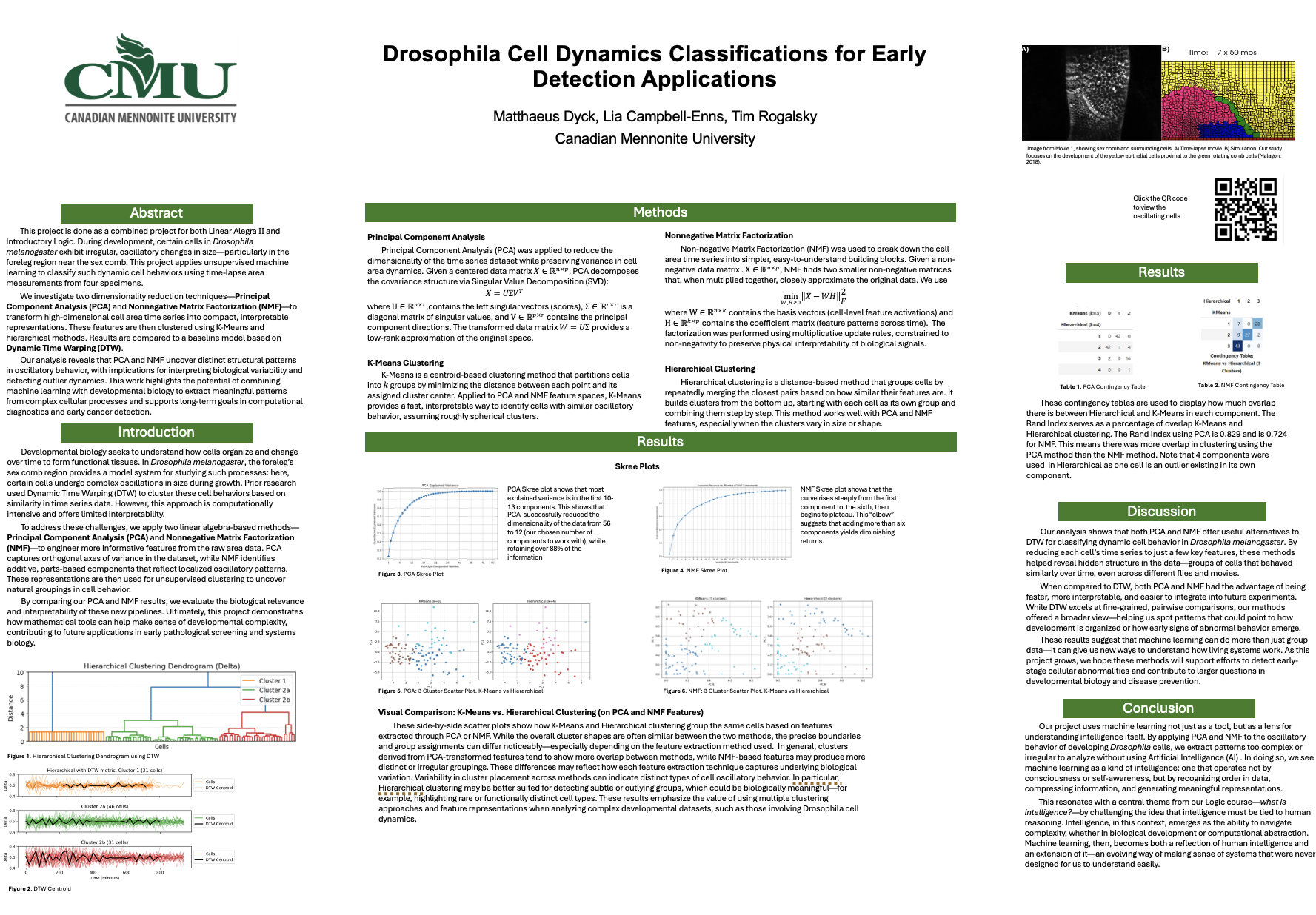
    I had final projects in two courses, Linear Algebra II and Introductory Logic. Tim suggested I combine them and collaborate with a friend to assist him with his research. We coded in Python, worked through multiple layers of analysis, and presented our findings at CMU’s Science Symposium and at a scientific conference.

  2. Forming study groups is essential

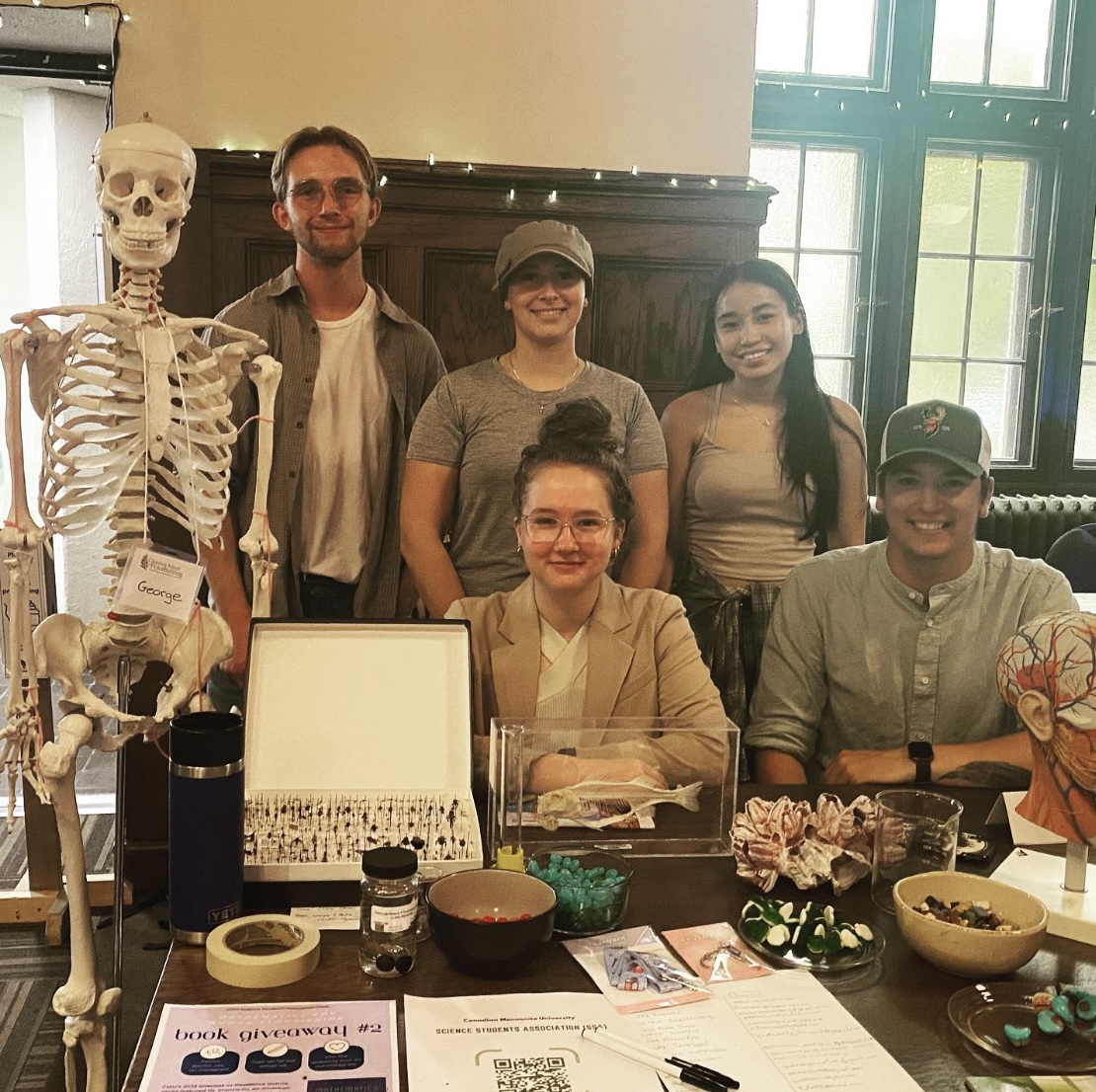
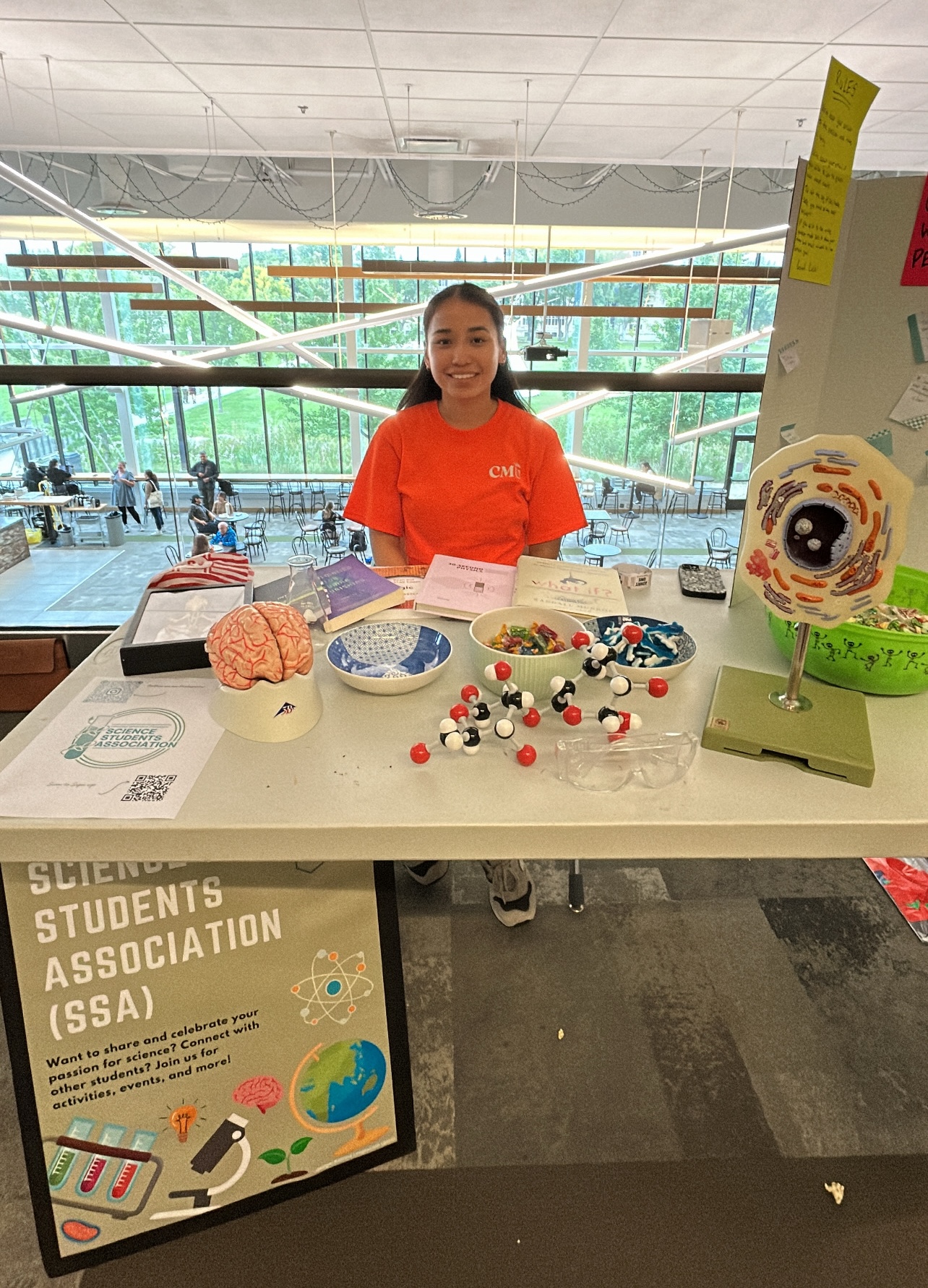
    In my first year, I took Physics with a few upper-year science students. They invited me to study groups, exchanged contact information, and became a support system. Through them, I joined the Science Students Association (SSA). With the SSA, I helped host a scientist in residence, met PhD students, connected with other science students, and developed leadership skills. I am now a co-leader of the SSA, where I enjoy meeting first-year students, planning science-related events, and connecting with others who share a passion for science.

  3. You can request courses that are not normally offered

    In high school, physics was my favourite class, but second-year courses like Electromagnetic Field Theory and Biophysics are not regularly available at CMU. When a small group of students expressed interest, however, the faculty arranged to offer them. At CMU, professors take a personal interest in students’ goals, creating unique opportunities tailored to what we are excited about.

  4. AI can be a tutor, not just a tool

    I have also learned to use AI as a tutor rather than a shortcut. In my math classes, I practice guiding AI to ask me questions that challenge my understanding, helping me think critically and solve problems step by step. In today’s world, it is also important to think critically about AI—its potential, its ethics, and its limitations. CMU encourages this reflective approach, helping students engage with technology thoughtfully.
Lia’s final project for Linear Algebra II and Introductory Logic.

The flexibility of CMU’s mathematics program has allowed me to dive into topics I care about and apply insights from other disciplines. As a minor in Peace and Conflict Transformation Studies (PACTS), I have seen how both fields center on problem solving. Math teaches structured, logical solutions, while PACTS explores negotiation, ethics, and human-centered reasoning. Together, they show that problem solving can bridge technical challenges and human relationships.

CMU’s math program is a small, supportive community that adapts to students’ interests, encouraging exploration beyond mathematics. Connecting with people, nature, and music grounds my studies and allows me to consider the consequences, challenges, and ethics behind complex mathematical questions. At CMU, math and peace are connected through the shared pursuit of understanding, thoughtful problem solving, and making a positive impact on the world.

Lia Campbell-Enns is a fourth-year Bachelor of Science student, majoring in Mathematics.

Powered by WordPress & Theme by Anders Norén